When we first moved into the house, the fireplace had one of those classic 1990s mantels that seemed fancy at the time and ridiculous in hindsight. You know the type. Oversized, multi-layered, and technically “wood” in the same way a movie set is technically a building. It was a hollow shell pretending to be substantial, and once I noticed it, I couldn’t unsee it.
It didn’t take long to realize it had to go.
I replaced it with a thick pine log mantel. It was real wood, solid and heavy, and it looked good and felt right. It did exactly what it was supposed to do for about five years.
The problem with new pine is that it still remembers being a tree. When you light a fire, it does not just warm up, it pushes back. Sap seeps out as if it is staging a quiet protest, leaving sticky reminders that it has not fully accepted its new career as home decor. It was not terrible, but it was not finished either.
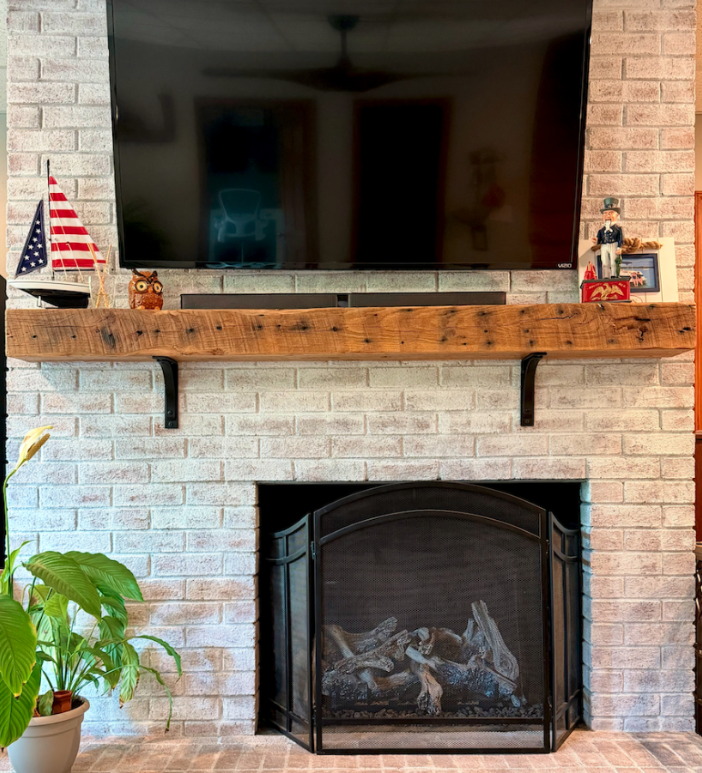
When I came across a reclaimed oak barn beam in Virginia, I knew it was the right replacement. It was dense, weathered, and worn in all the right ways. It matched the oak floors like they had been waiting on each other for years.
I cleaned it, sealed it clear, mounted it, and stepped back. It felt settled and permanent in a way the pine never did.
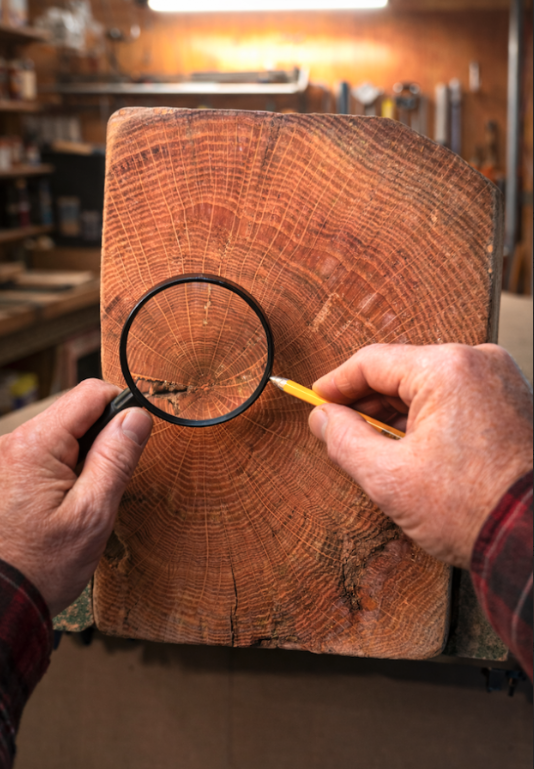
Out of curiosity, mostly for fun, I loaded photos of the oak beam’s end grain into ChatGPT for an age estimate. I figured I’d get a rough guess and move on. Instead, what came back made me stop and think.
The physical evidence tells a remarkable story. Based on the dense ring count, this oak likely began growing around 1700. These rings are incredibly tight, a biological signature of an old-growth Eastern hardwood forest, where trees grew slowly and fought for every inch of sunlight.
The beam’s surface also bears distinct sash-saw marks, a milling technique common in Virginia from the late 1700s through the mid-1800s. This suggests the tree stood for 140 to 180 years before being harvested for timber during a peak era of barn construction. Considering it served for over a century as a structural centerpiece, this wood has effectively witnessed more than 300 years of continuous history.
In plain English, this oak tree was already growing while people were still arguing about whether America should exist.
It started growing before electricity, before railroads were common, and before indoor plumbing. It stood through the American Revolution, the Civil War, the Great Depression, and generations of ordinary people who worked hard, raised families, and disappeared without much recognition.
Now it hangs in my living room while I drink coffee, with grandkids running through the house, and YouTube TV plays something I am half watching. I have become slightly obsessed with this old piece of lumber.
The pine beam it replaced couldn’t make it five years without leaking sap, but that is not a complaint so much as perspective.
Some things are new. Some things are useful. Some things are convenient. Others are seasoned by time. They have been tested, they have been patient. They don’t rush or announce themselves. I’m sure this grand old piece has survived being out of style more than once. It simply keeps doing the job.
There is something good for your soul about putting your hands on a piece of wood that has lived through multiple generations and realizing it is now part of your daily life. It is not in a museum and it is not behind glass.
Every time I light a fire now, I look at that beam and think about the fact that it has been standing, in one form or another, for more than 300 years. It has already lived more life than I ever will, and it is still here.