
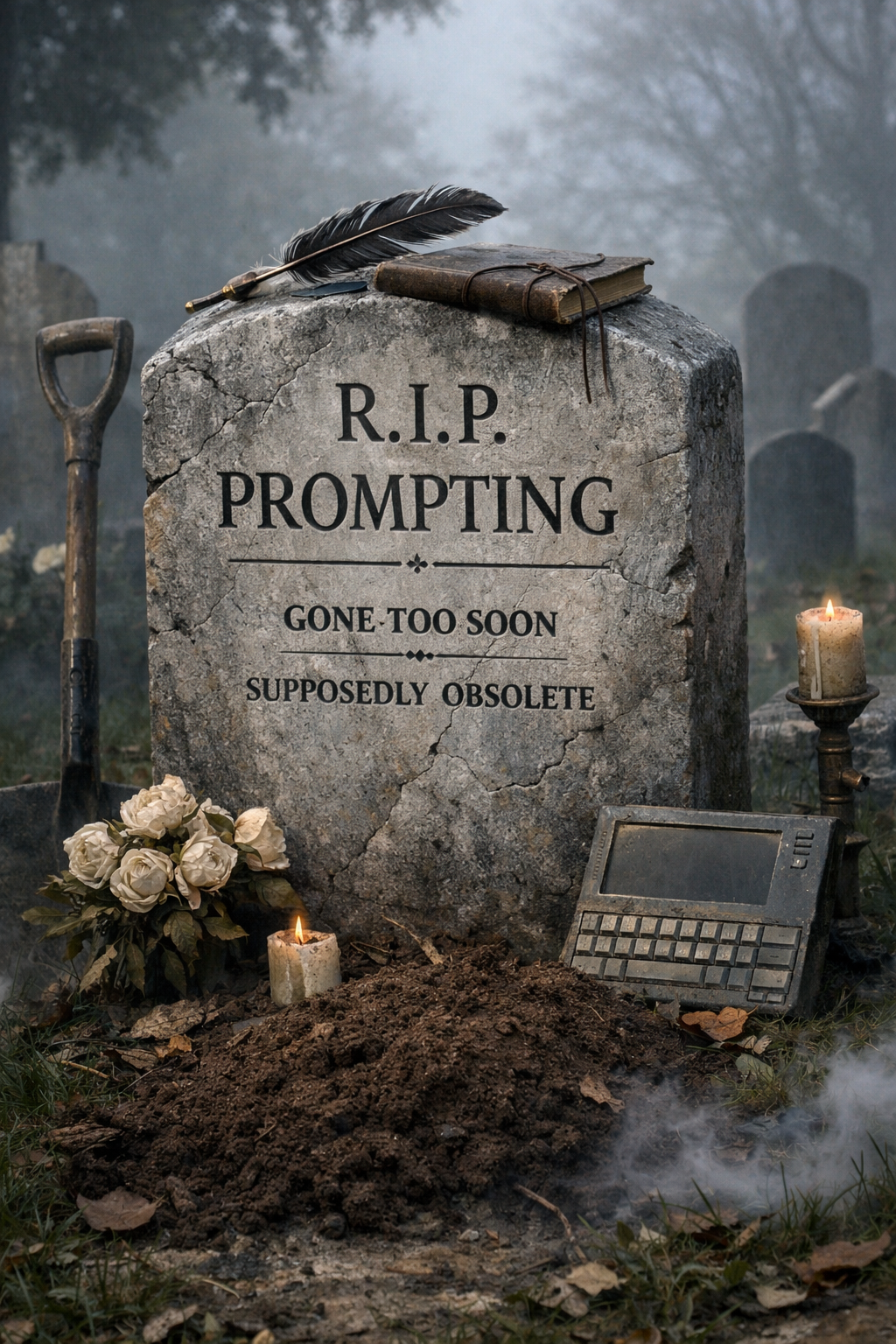
I work with a lot of software, cloud services, and AI. This is an AI piece.
I keep hearing that prompting is dead. That the models are “smart enough now” to just kind of read your mind, figure out what you meant, and spit out the right thing automatically.
But that’s not been my lived experience.
Honestly, the smarter the tools get, the more obvious it becomes that the bottleneck is you. Not because you’re not smart or don’t know what you are trying to do. Because you’re busy, you’re moving fast, and it takes time to learn how to use tools effectively.
AI can generate a lot, but it doesn’t magically know what “good” looks like in your world unless you show it. And “show it” doesn’t mean writing some 40-line prompt with fancy words. It means being clear about the job you want done, the constraints that matter, and what success looks like.
And if you want a simple way to think about it, think of AI like a power tool. A nail gun is incredible. But you still have to aim it. If you point it at the wrong place, it will work perfectly… like on my husband’s finger when he’s building a banquette in our dining room. That’s how people end up saying, “AI isn’t useful,” when what they really mean is, “I didn’t steer it.” That’s also how your buddy ends up busting your chops that you nailgunned yourself to get a break.
The good news is you don’t need to become a prompt wizard. Tell it who it’s talking to, what format you want, and what to avoid. Give one example if you can. Ask it to challenge your assumptions if you’re using it to think, not just to draft some verbiage.
This still holds true: AI will confidently hand you something that sounds right but it will be absolutely wrong. It will make up details, miss nuance, and sometimes take the laziest interpretation of what you said. So your responsibility doesn’t go away. If anything, it goes up. You have to keep your critical thinking turned on, especially when the output feels smooth.
So the next step is simple. The next time you use AI, don’t start by asking for the answer. Start by asking it for the questions you forgot to ask. That’s where this gets interesting.
The tools are not magic, and they won’t work effectively for you until you get precise about what you actually want. That precision is what gives your prompt its power.