
People follow trust, not titles. That is not a leadership quote or a conference keynote. It is something you either learn early or learn the hard way, and the hard way has a way of being thorough.
There is a version of leadership that looks right from the outside. Clean communication, clear direction, well-run meetings, a strategy deck that actually makes sense. None of that is wrong. But none of it is enough, and the people doing the work know the difference faster than most leaders realize. They always do.
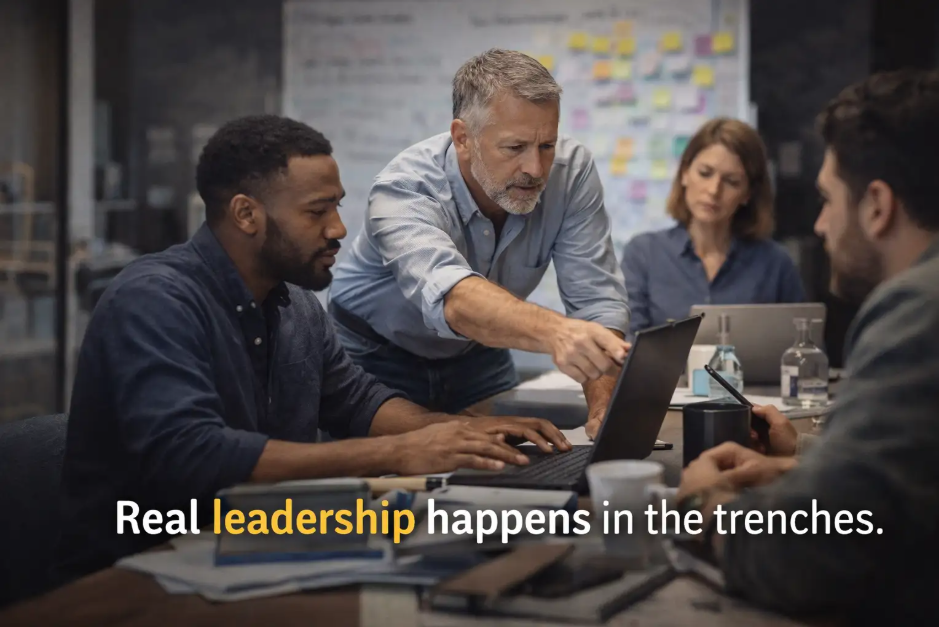
What earns trust is presence. Not the performance of presence, but the actual thing. Knowing what the work costs. Not the date written on the whiteboard, but the real cost. The late night before a deadline when something breaks and nobody is sure it can be fixed in time. The customer call that goes sideways and has to be held together by whoever is in the room. The moment when the team looks around to see if anyone senior is going to step into the mess with them, or wait at a comfortable distance for the summary.
Leaders who show up in those moments don’t have to ask for credibility. They already have it.
The ones who don’t show up don’t lose trust all at once. It happens quietly, then permanently. People stop raising problems early because they’ve learned that early problems just create noise without producing help. They start managing up instead of solving forward. They comply with direction, but they stop committing to outcomes. Once that gap opens between a leader and a team, it is very difficult to close. You can feel it in every meeting and see it in every status update that says more than it means.
Getting close to the work does not mean doing everyone’s job or second-guessing every decision. It means understanding the friction well enough to make calls the team can respect, even when they disagree with them. It means knowing what good looks like because you’ve seen it built from the inside. That understanding does not come from a dashboard or a weekly report. You have to earn it the same way the team did, by being close enough to feel it.
The leaders worth following have usually paid that price. It shows in the questions they ask, the tradeoffs they make, and the way they talk about the work. Their teams know the difference between someone who has been in it and someone who is managing around it.
That is not a management philosophy. It is just how trust works, and it has never worked any other way.